Drone mercury monitoring makes it possible to measure airborne mercury at sites crews can’t safely reach. Our new white paper explains how a drone-mounted sampler and a ground-based XRF analyzer work together to do it.
Mercury is one of the hardest air pollutants to keep track of. It comes from coal combustion, metal smelting, cement kilns, chlor-alkali plants and gold mining, and even small amounts in the air are a real health and environmental concern. However, the places that need mercury monitoring the most, like stacks, flares, tailings ponds and remediation zones, are usually the places people shouldn’t be standing.
That is the problem behind our latest white paper, Airborne Mercury Monitoring: Drone-Based Sampling and XRF Analysis with the Scentroid DR2000. Here is a quick look at what it covers.
Why traditional mercury monitoring falls short
Today, most teams rely on fixed ambient stations or manual sampling campaigns for mercury air monitoring. Unfortunately, both have the same two problems. They put field crews close to the source, and they add a wait between collecting a sample and getting lab results back. When you are trying to understand a release or confirm compliance, that wait can hold up important decisions.
In addition, fixed stations only tell you what is happening where they sit. If the plume is elevated or drifting somewhere else, you might miss it entirely.
Drone mercury monitoring: sample in the air, measure on the ground
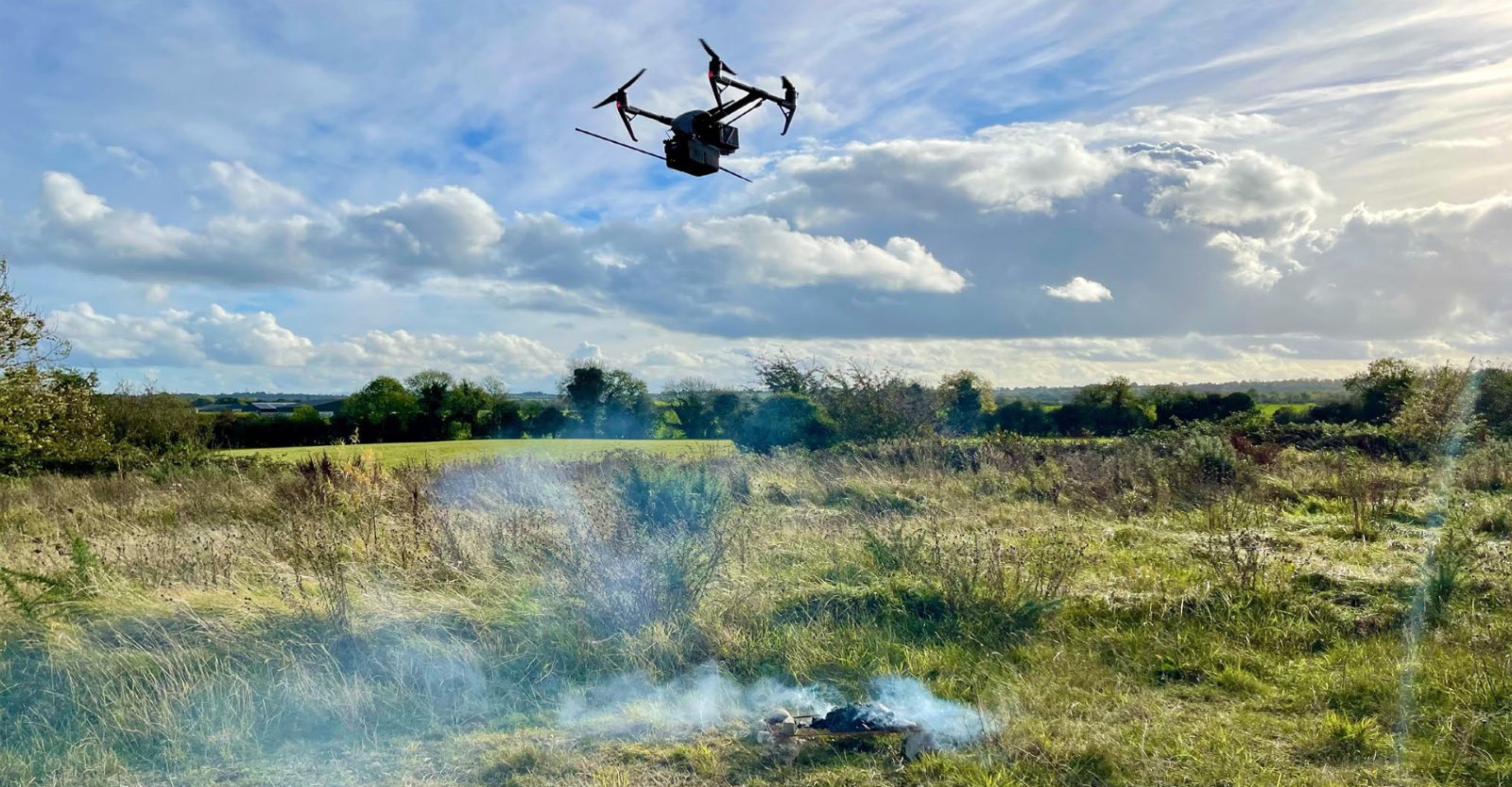
Instead, Scentroid’s approach splits the job in two. The DR2000 Flying Lab collects the sample in the air, and the Airborne Metal Analyzer measures it on the ground.
- Fly to the source. The DR2000 mounts to most commercial drones and can sample up to 150 metres vertically or horizontally from the operator.
- Capture the mercury. An onboard pump pulls ambient air through a dedicated filter at the sample inlet, so the filter captures airborne mercury during flight or while hovering at a set point.
- Tag every sample. The DR2000 stamps each sample point with GPS position, altitude, time, temperature and humidity, then streams it to the ground station tablet.
- Analyze on landing. The Airborne Metal Analyzer reads the filter using X-ray fluorescence (XRF), with results typically ready in about 7 minutes.
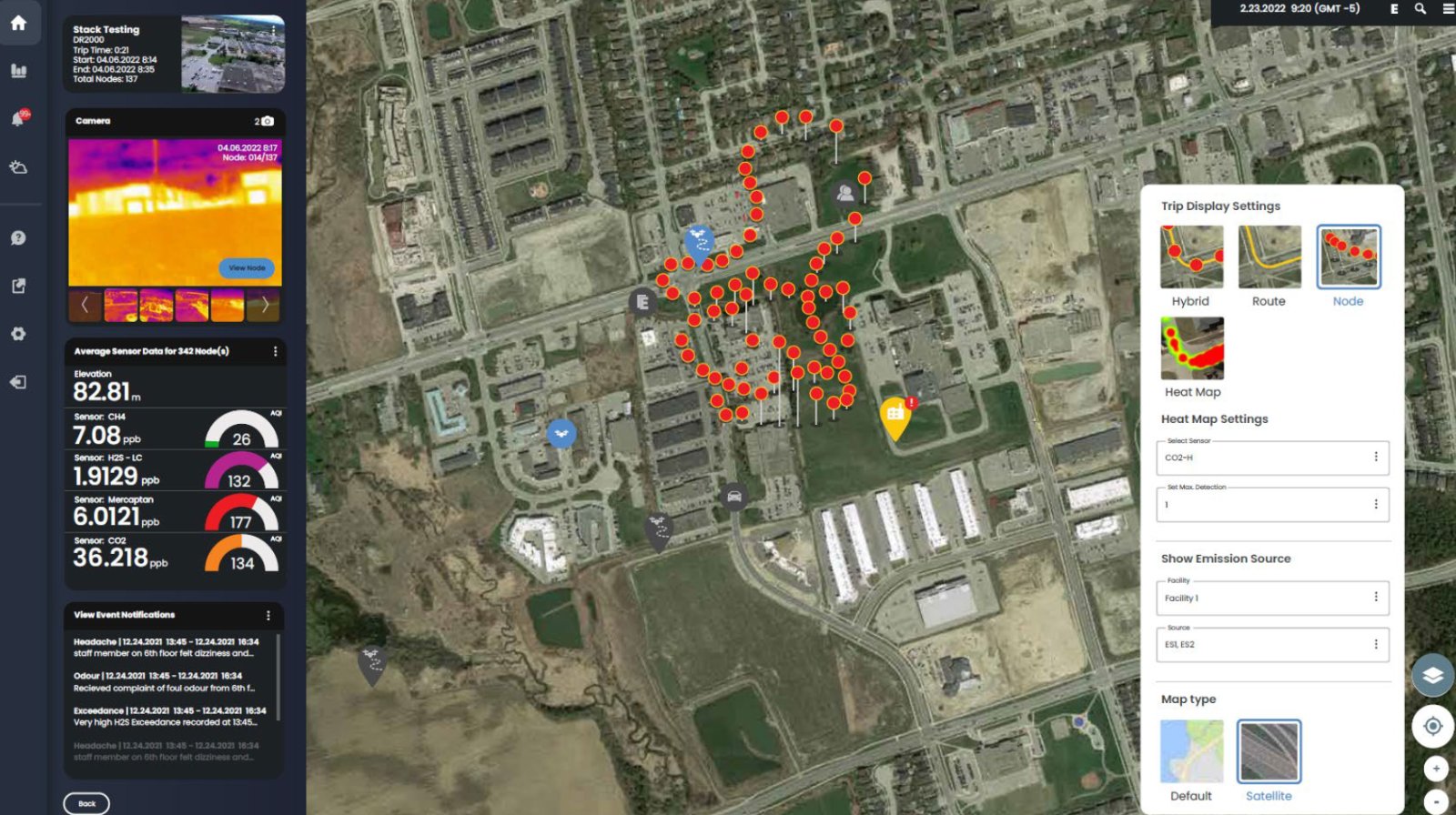
- Map the results. SIMS3 matches concentrations to the flight data and displays them as a hotspot map.
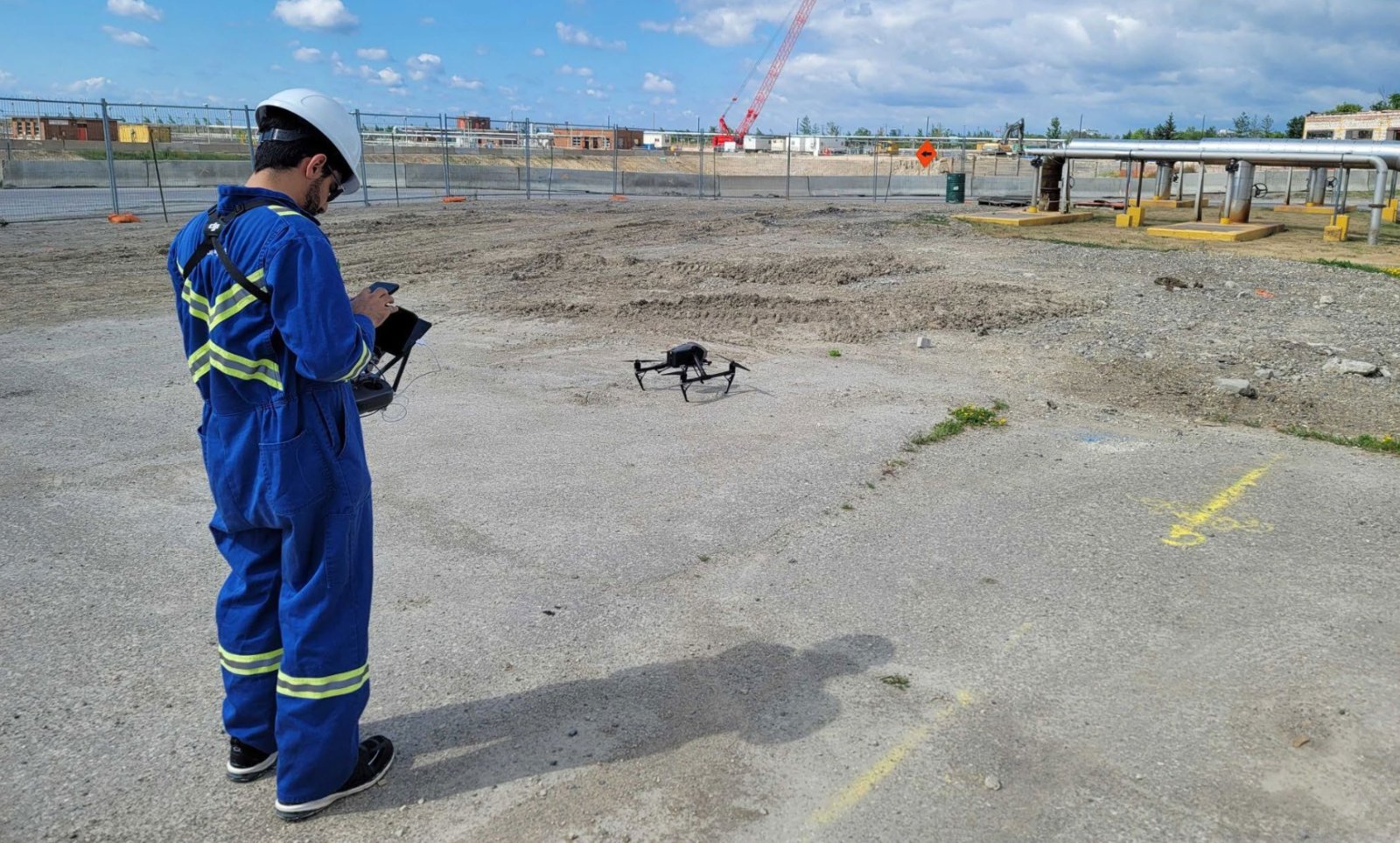
Because the analyzer never leaves the ground, it doesn’t add weight or power draw to the flight. And because the DR2000 uses a patented inlet design that only draws undisturbed air, propeller downwash doesn’t contaminate the sample.
Results in minutes instead of weeks
XRF is a non-destructive method that identifies elements by the unique X-ray energy they give off. Mercury has a distinct signature, so the analyzer can measure it directly, along with up to 30 other metals like lead, arsenic, cadmium, chromium, manganese and nickel if you need them.
As a result, you skip shipping filters to an off-site lab and waiting on lab turnaround for methods like NIOSH 7082. Typical sampling and analysis cost runs under $2 per sample.
Where drone-based mercury sampling makes sense
- Mining and smelting operations, including tailings ponds and stack emissions
- Oil and gas flare stacks, tank farms and pipeline corridors
- Coal-fired power plants and industrial combustion stacks
- Contaminated sites, landfills and remediation projects
- Artisanal and small-scale gold mining regions
- Emergency response and spill or release assessment
- Fenceline and regulatory compliance programs
For example, in many of these cases drone mercury monitoring with a single flight can replace a multi-day ground survey, while keeping crews well away from the hazard.
Read the full white paper
The white paper goes into more detail on the DR2000 sampling platform, how XRF reads a mercury filter, the full flight to data workflow and complete technical specifications for both instruments.
Read the Airborne Mercury Monitoring white paper or download the PDF.
Have a site where mercury monitoring has been difficult or unsafe? Contact our team or call 1.888.988.4337 to talk about whether drone sampling is a good fit.