Chemical Threat Detection System
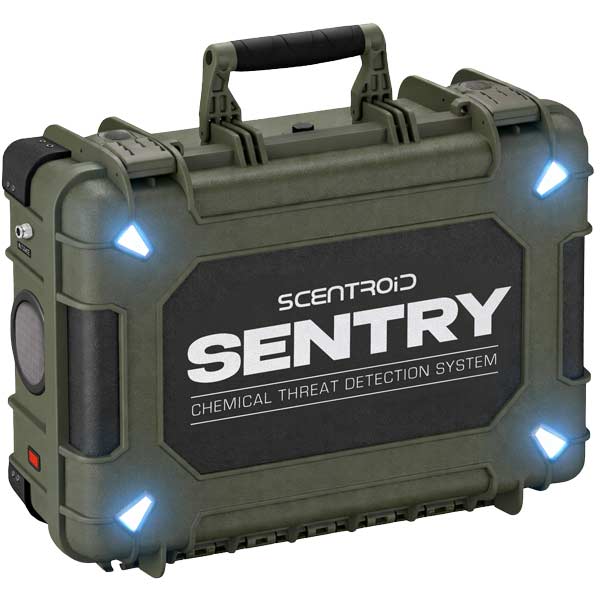
The Scentroid TR9+ Sentry
Chemical Threat Detection System for Real-Time Hazard Identification
Scentroid’s chemical threat detection system is designed to identify airborne toxic chemicals, industrial hazards, and chemical threats in real time. Using advanced multi-sensor technology and mobile deployment platforms, it supports rapid response in emergency, industrial, and high-risk environments.
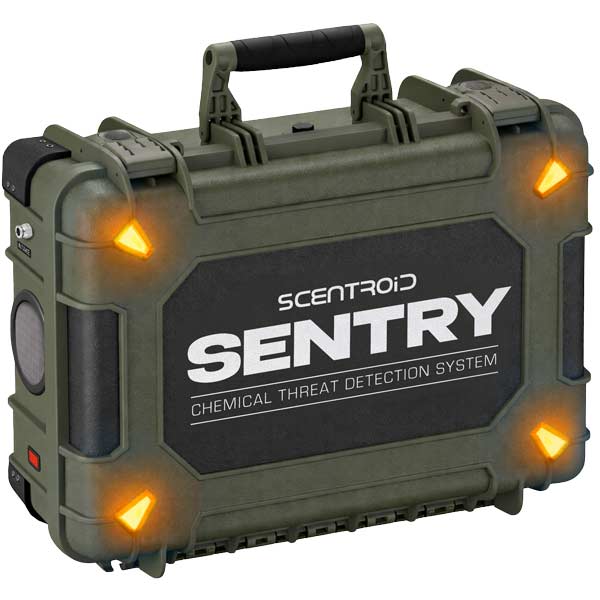
Equipped with up to 18 Sensors
The Sentry provides comprehensive detection of hazardous pollutants, chemical warfare agents (CWAs), and radiation threats within a single, unified system.
Military-Grade Chassis
IP67 rated, operationally ready for environments from -40°C to +50°C.
Secure Remote Data Visualization
All critical data is encrypted and securely transmitted to a super-rugged field tablet as well as to a centralized command center.
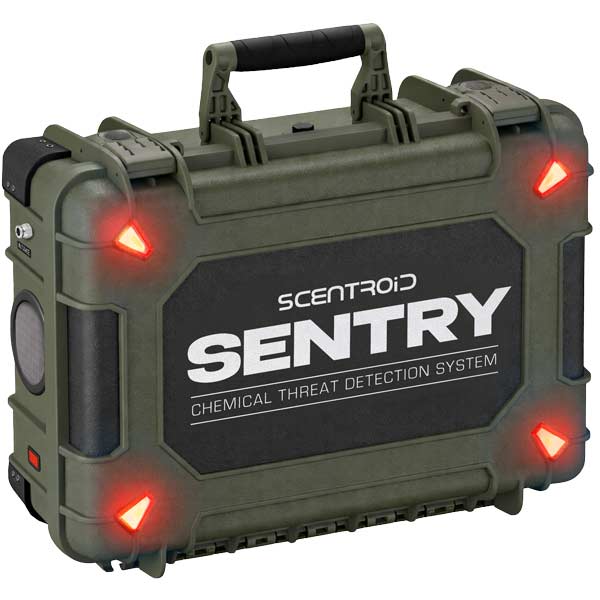
Integrated Audible and Visual Alarms
Crucial safety is ensured through built-in alarms that trigger instantly upon detection, providing an immediate warning to everyone in the vicinity, independently of the operator.
WHAT IS THE CHEMICAL THREAT DETECTION SYSTEM?
Our chemical threat detection system is a specialized monitoring solution used to detect, identify, and quantify hazardous airborne chemicals. These systems are essential in environments where exposure to toxic gases or chemical agents can pose serious health and safety risks. Scentroid’s system integrates advanced sensing technologies capable of detecting a wide range of compounds, including:
- Toxic industrial chemicals (TICs)
- Volatile organic compounds (VOCs)
- Hazardous gases such as H₂S, NH₃, and NO₂
- Chemical warfare agents and airborne contaminants
THE MODERN CHEMICAL THREAT DETECTION CHALLENGES
Airborne chemical Hazards are increasingly complex. Modern incidents rarely involve a single chemical threat. Military attacks, industrial sabotage, and infrastructure failures often produce complex airborne mixtures of toxic gases, particulates, and volatile compounds. Effective response requires rapid detection and identification of Chemical warfare, Toxic Industrial Chemicals, or Radiological Materials.
CHEMICAL WARFARE AGENT DETECTION
Blood agents, choking agents, nerve agents, and blister agents remain among the most dangerous airborne hazards due to their high toxicity and rapid physiological effects.
TOXIC INDUSTRIAL CHEMICAL DETECTION
Industrial facilities store and process large volumes of hazardous chemicals. Damage to refineries, fertilizer plants, semiconductor fabrication facilities, or chemical manufacturing plants can release dense toxic plumes that spread far beyond the point of origin.
RADIOLOGICAL
HAZARDS
Explosive dispersal of radioactive material (“dirty bombs”) presents a combined chemical and radiological monitoring challenge.
Sentry provides multi-sensor detection capabilities to support military reconnaissance, emergency response, and infrastructure protection operations.
INTEGRATED MULTI-SENSOR
CHEMICAL THREAT MONITORING
The Sentry Chemical Threat Detection System combines several complementary sensing technologies to provide broad-spectrum detection of airborne contaminants. Each sensor type is optimized for the detection of specific chemical classes while operating simultaneously to produce a unified environmental assessment. Supported sensing technologies include:
ELECTROCHEMICAL SENSORS (EC)
Highly selective sensors designed for detection of specific toxic gases including hydrogen sulfide, chlorine, ammonia, nitrogen dioxide, and hydrogen cyanide.
PHOTOIONIZATION DETECTION (PID)
Broadband volatile organic compound detection using ultraviolet ionization.
ELECTRO-POLYMER SENSORS
Specialized sensors designed to detect highly toxic hydride gases such as arsine.
THERMAL FRACTIONATION
PHOTOIONIZATION DETECTION (TF-PID) FOR CWA DETECTION
Selective chemical analysis capable of identifying nerve and blister agents at trace concentrations.
LASER PARTICLE COUNTERS
Optical monitoring of airborne particulate concentrations (PM1, PM2.5, PM10).
RADIOLOGICAL
DETECTION
Gamma radiation monitoring for detection of radiological dispersal events.
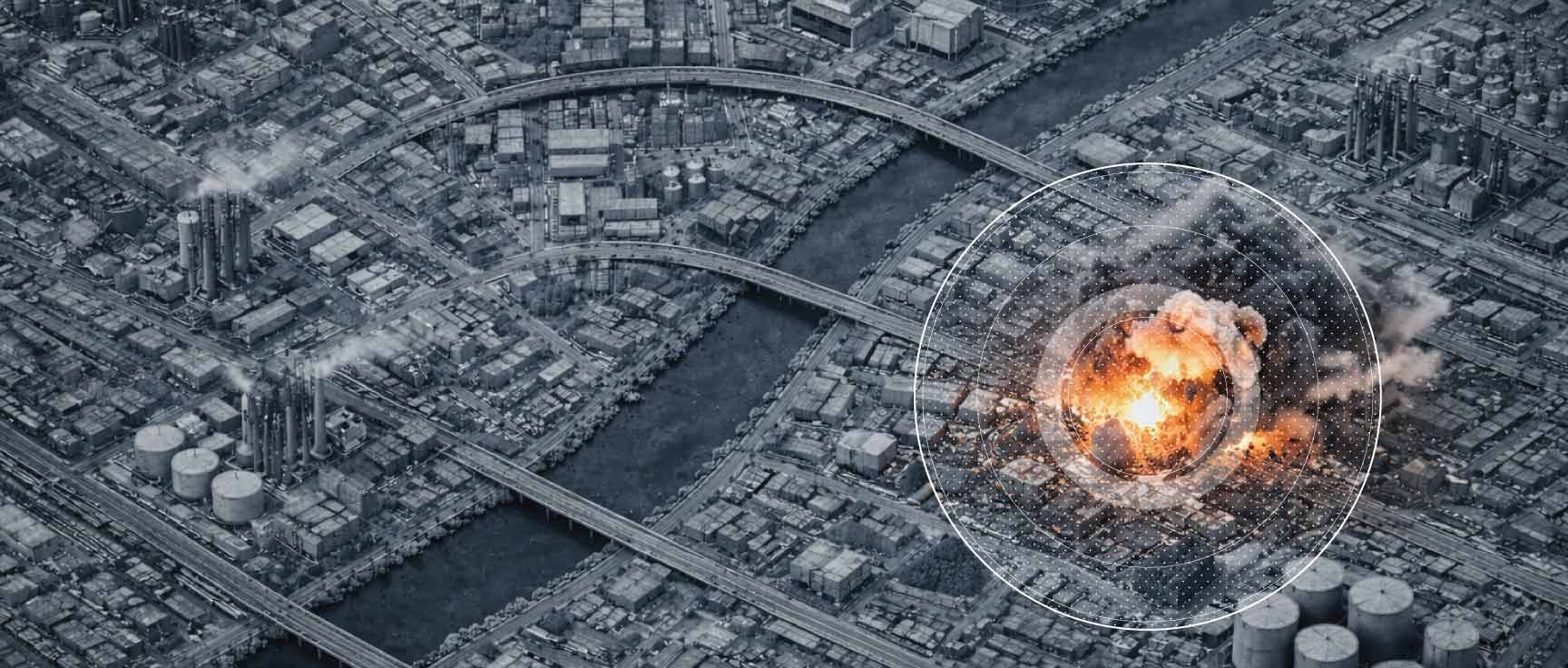
HAZARD MAP


Detects ionizing radiation and airborne radioactive
contamination that may result from nuclear incidents,
industrial sources, or radiological threats
Designed to detect the presence of highly
toxic chemical warfare agents and related
compounds
Monitors a wide range of volatile organic
compounds emitted from fuels, solvents,
chemical production, and industrial
processes
Detects harmful gases produced during
combustion processes such as fires,
explosions, or industrial activity
Identifies and quantifies hazardous industrial
chemicals that may be released from
manufacturing facilities, transportation
accidents, or storage failures
Measures airborne particulate matter including
dust, smoke, and fine aerosols that can impact
respiratory health and operational safety
DETECTION CAPABILITIES
CHEMICAL WARFARE AGENT DETECTION
Chemical warfare agents represent some of the most hazardous airborne threats due to their high toxicity and rapid physiological impact. Sentry supports the detection of several classes of chemical warfare agents through specialized sensor combinations and analytical techniques.
Blood Agents:
Blood agents interfere with cellular respiration and prevent oxygen utilization in the body. Examples include:
- Hydrogen Cyanide (HCN)
- Arsine (AsH3)
Detection is achieved using electrochemical and electro-polymer sensors capable of identifying these compounds at low concentrations.
Choking Agents
Choking agents damage respiratory tissue and impair lung function. Examples include:
- Chlorine (Cl2)
- Phosgene (COCl2)
- Hydrogen Chloride (HCl)
Electrochemical sensors provide selective detection for these gases at trace and hazardous concentrations.
Nerve and Blister Agents
Agents such as Sarin, VX, and Mustard Gas require advanced detection approaches due to their chemical complexity.
Sentry supports detection through PID-based monitoring combined with GC-PID analysis and pre-concentration techniques.
This allows identification of trace concentrations of these highly toxic compounds.
INDUSTRIAL CHEMICAL HAZARDS
Refinery and Petrochemical Releases
Disaster may release large quantities of:
- Hydrogen Sulfide (H2S)
- Hydrogen Fluoride (HF)
- Sulfur Dioxide (SO2)
- Volatile organic hydrocarbons
Manufacturing Facilities
Disasters involving chemical manufacturing and plastics production facilities may release:
- Styrene and Phosgene
- Acrylonitrile
- Hydrogen Cyanide
Metallurgic Operations and Mining
Metal processing and mineral extraction facilities can release:
- Sulfur Dioxide (SO2)
- Hydrogen Cyanide (HCN)
- Carbon Monoxide (CO)
CRITICAL
INFRASTRUCTURE
MONITORING
PROTECTION

Water and Wastewater Treatment
Large volumes of Chlorine and Ammonia are stored. Damage to storage tanks can produce dense toxic gas clouds capable of affecting nearby communities.
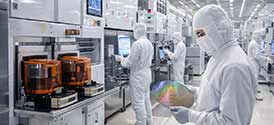
Semiconductor Manufacturing
Semiconductor fabrication facilities use extremely toxic Hydride gases including Arsine and Phosphine during wafer processing operations.

Plastics and Polymer Manufacturing
Production of polymers and plastics frequently involves chemicals such as Hydrogen Cyanide and Phosgene, both of which have historic use as chemical warfare agent

Food Processing and Cold Storage
Industrial refrigeration systems often contain large volumes of anhydrous ammonia. Catastrophic release events can rapidly create hazardous conditions.
CONFIGURATIONS
RESPONDER
Detect Environmental Fallout
RESPONDER
CONFIGURATION 'A'
Post Attack / Disaster Response
DEFENDER
Tactical and Hazmat Teams
DEFENDER
CONFIGURATION 'B'
CWA Detection / Perimeter Security
RESPONDER SENSORS:
Photo-Ionization Detector
Detects the massive initial cloud of pollutants. Essential for mapping the “Hot Zone.”
Electro-Polymer
Arsine (AsH3), Hydrogen Sulfide (H2S), Sulfur Dioxide (SO2), Nitrogen Dioxide (NO2)
Electro-Chemical
Hydrogen Cyanide (HCN), Phosgene (COCl2), Chlorine (Cl2), Hydrogen Fluoride (HF), Ammonia (NH3), Hydrogen Chloride (HCl), Carbon Monoxide (CO)
NDIR
Carbon Dioxide (CO2), LEL (Combustibles/Methane)
Gamma Sensor
High Energy Radiation
GPS
High-accuracy spatial mapping of all samples
DEFENDER SENSORS:
Thermal Fractionation (TP-PID)
Use of Selective thermal desorption to detect chemical warfare agents such as VX, Sarin and Mustard Gas in ppt level.
Electro-Polymer
Arsine (AsH3)
Electro-Chemical
Hydrogen Cyanide (HCN), Phosgene (COCl2), Chlorine (Cl2), Hydrogen Fluoride (HF)
Gamma Sensor
High energy radiation
GPS
High accuracy spatial mapping of all samples
SENTRY'S FIELD ADVANTAGE FOR CHEMICAL THREAT RESPONSE
ION Mobility Spectrometry (IMS)
Standard CWA detectors (IMS) confuse smoke, solvents, and other pollutants released in a disaster zone with actual Nerve Agents. The result is dangerous false positives, panic, and loss of operator trust.
Portable Gas Chromatography (GC-MS)
GC-MS can distinguish smoke from nerve agents, but it is complex, fragile, slow, and too expensive for widely-deployed field operations.
Sentry Defender (TF-PID)
provide high-fidelity detection of CWA threats in chaotic environments without the complexity, expense, or slower operation of GC-MS at a fraction of the cost.
CUSTOMIZABLE PLATFORM
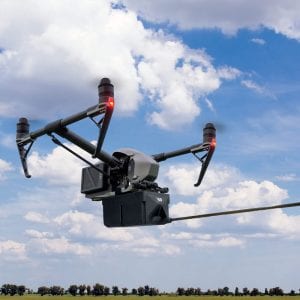
Mounted
Ground Vehicle
mounted
Mounted
Drone-Based
Compatible
Compatible
Probe
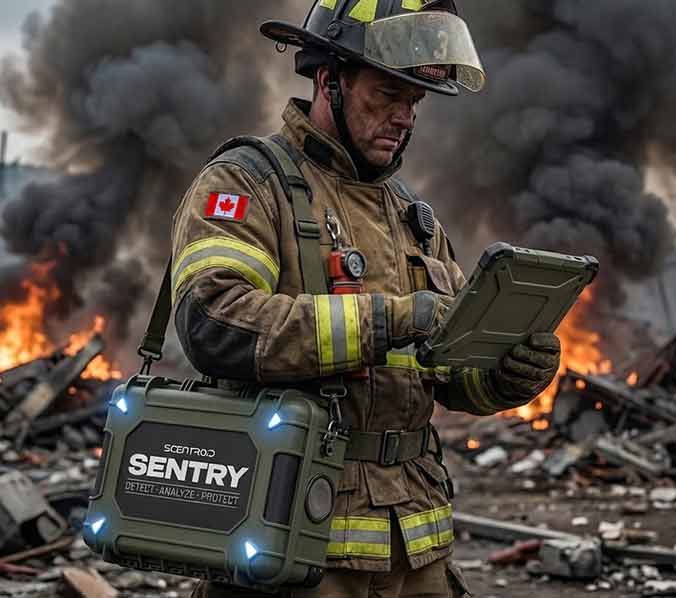
MOBILE MONITORING IN OPERATIONAL ENVIRONMENTS
Sentry is designed for deployment in environments where rapid environmental intelligence is required to protect personnel and assess airborne hazards.
Typical operational deployments include:
- Military Reconnaissance
- Detection of chemical threats and toxic industrial hazards during military operations.
- Disaster Response
- Assessment of airborne hazards following industrial accidents, explosions, or natural disasters.
- Infrastructure Protection
- Monitoring sensitive facilities for accidental releases or malicious activity.
- Hazardous Materials Response
- Supporting emergency response teams with real-time air quality measurements during chemical incidents.
GAMMA RADIATION
DETECTION
Gamma radiation is invisible, high-energy radiation produced by radioactive materials, nuclear incidents, and radiological dispersal devices (RDDs). Because it penetrates most materials, exposure can occur without warning, making rapid detection critical during radiological emergencies.
How the Scentroid Sentry can help
The Sentry’s integrated gamma radiation sensors continuously monitor background levels and trigger alerts when abnormal radiation is detected. Real-time mapping enables responders to quickly identify hotspots, establish safe zones, and locate radioactive sources.
Key Operational Benefits
- Real-time gamma radiation detection
- Instant alerts above background levels
- Radiation hotspot mapping
- Combined radiological and chemical monitoring platform
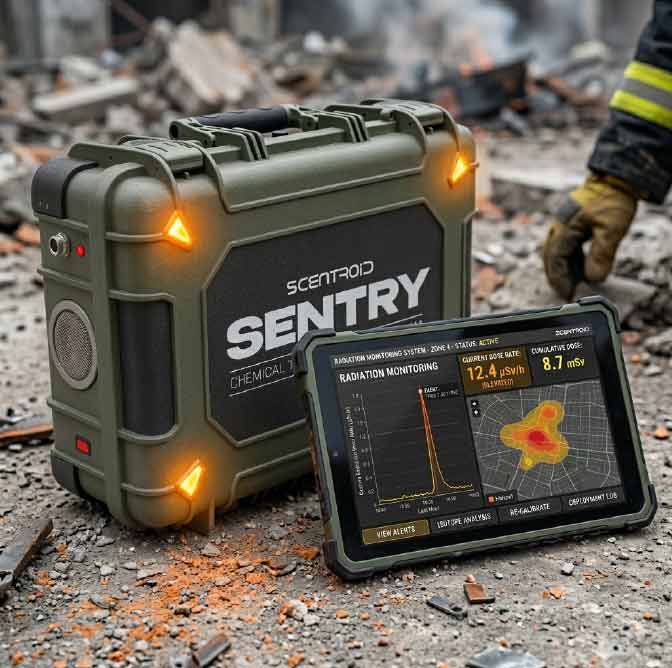
SUPERIOR RUGGED CASING FOR ALL ENVIRONMENTAL NEEDS
IP67 Waterproof
and Dustproof
Injection-Molded
CN-1 Resin
Integrated
Water Filtration
Lockable
Latches
Rubberized
Handles
Steel Pin
Hinges
ENVIRONMENTAL INTELLIGENCE AND DATA INTEGRATION
The Sentry is a multi-sensor air monitoring system designed for rapid detection of chemical warfare agents, toxic industrial chemicals, combustion byproducts, and radiological hazards.
Sentry provides real-time situational awareness in environments where airborne contaminants pose immediate risk to personnel, infrastructure, and surrounding populations.
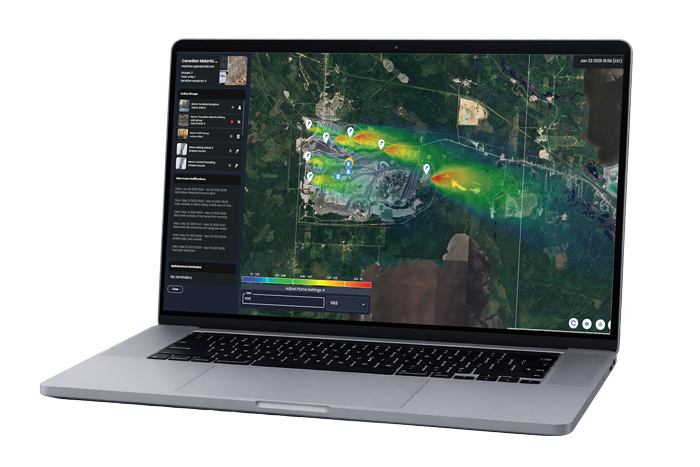
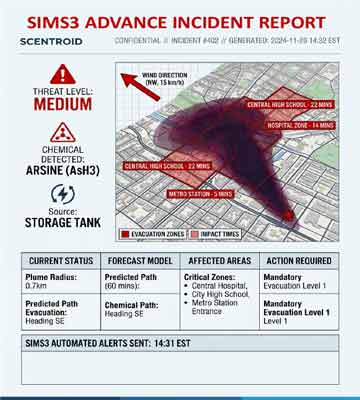
SIMS3: AI DRIVEN PREDICTIVE INTELLIGENCE
Scentroid Sentry’s AI-powered predictive intelligence, driven through the SIMS3 platform, transforms raw sensor data into actionable, real-time insights.
By continuously analyzing multi-sensor inputs, including toxic gases, VOCs, particulates, and radiological data, SIMS3 identifies patterns, trends, and anomalies before they escalate into critical events. The platform leverages advanced dispersion modelling and machine learning algorithms to predict the movement and impact of hazardous releases, allowing operators to visualize threat evolution, pinpoint sources, and understand exposure risks across complex environments.
SPECIFICATIONS
Category | Specification |
|---|---|
Enclosure | Military-grade ruggedized composite case (crush-resistant, shock-proof) |
Dimensions (Estimated) | 350 mm x 300 mm x 150 mm (13.7” x 11.8” x 5.9”) |
Weight | 3.5 kg (Defender) / 4.8 kg (Survivor, including TPD and Gamma modules) |
Ingress Protection | IP67 (Case closed) |
Operating Temperature | -40°C to +50°C (-40°F to 122°F) |
Operating Humidity | 5% to 95% Non-condensing (Active filtration available for high-humidity/water-spray environments). |
Mounting Options | Man Portable (Shoulder strap/backpack), Vehicle-Mounted (Quick-Release), Stationary (Tripod/Wall mount) |
Internal Battery | High-capacity, hot-swappable Lithium-Ion. |
Runtime (Defender) | 12+ hours continuous monitoring. |
Runtime (Survivor) | 8+ hours (Dependent on frequency of Thermal Fractionation flash-heating cycles). |
External Power | 12V-24V DC input for continuous vehicle power. |
Auxiliary Power | Compatible with Scentroid rapid-deploy solar chargers for unattended perimeter sentry mode. |
Local Interface | Bluetooth 5.0/LoRa connection to Ruggedized Operator Tablet. Provides range up to 10km |
Remote Transmission | Built-in Secure 4G/LTE cellular modem and Wi-Fi. |
Central Command | Streams live encrypted telemetry, GPS, and sensor data to the SIMS3 Cloud Platform for swarm mapping and plume modeling. |
Onboard Storage | 32GB solid-state memory (Stores >5 years of continuous sensor logs). |
Technology | Thermal Fractionation (Micro-Trap and 10.6 eV PID). |
Heating Profile | Low Thermal Mass (LTM) heater. 30°C to 300°C in < 5 seconds (<1°C precision control). |
Sample Phase | 50 – 150 mL/min |
Dry Purge | 50 mL/min |
Desorb / Analyze Phase | 10 – 20 mL/min (Concentrated agent injection) |
Sensitivity | Parts-Per-Trillion (PPT). 1000x enrichment factor. |
Target Agent: Nerve | (G/V Series) Sarin (GB), Soman (GD), Tabun (GA), VX. |
Target Agent: Blister | (Vesicants) Mustard Gas (HD), Lewisite. |
False Alarm Mitigation | Multi-phase thermal stripping isolates heavy CWAs from light combustion background noise (Diesel, Kerosene, Plastics). |
SENSOR SPECIFICATIONS
Sensor Technology | Target Gas | Hazard | Detection | Range | Resolution |
|---|---|---|---|---|---|
PID (10.6 eV) | Broadband VOCs / Jet Fuel / Agents | General Safety | 1 ppb | 0 - 5000 ppm | 10 ppb |
Electro-Polymer | Arsine (AsH3) | Blood / Semiconductor | 0.02 ppm | 0 – 10 ppm | 0.05 ppm |
Electrochemical | Hydrogen Cyanide (HCN) | Blood | 0.1 ppm | 0 – 100 ppm | 0.5 ppm |
Electrochemical | Phosgene (CoCl2) | Choking | 7 ppb | 0 – 10 ppm | 0.01 ppm |
Electrochemical | Chlorine (Cl2) | Choking | 0.05 ppm | 0 – 200 ppm | 0.1 ppm |
Electrochemical | Hydrogen Fluoride (HF) | Acid | 2 ppb | 0 – 20 ppm | 0.1 ppm |
Electrochemical | Ammonia (NH3) | Corrosive | 0.005 ppm | 0 – 1,000 ppm | 1 ppm |
Electro-Polymer | Hydrogen Sulfide (H2S) | Lethal | 0.01 ppm | 0 – 500 ppm | 0.1 ppm |
Electro-Polymer | Sulfur Dioxide (SO2) | Combustion | 0.01 ppm | 0 – 200 ppm | 0.1 ppm |
Electrochemical | Hydrogen Chloride (HCl) | Acid | 0.5 ppm | 0 – 100 ppm | 0.1 ppm |
Electro-Polymer | Nitrogen Dioxide (NO2) | Combustion | 0.005 ppm | 0 – 50 ppm | 0.1 ppm |
Electro-Polymer | Carbon Monoxide (CO) | Fire Safety | 0.01 ppm | 0 – 2,000 ppm | 1 ppm |
Electrochemical | Oxygen (O2) | Asphyxiation | 0.1% vol | 0 – 30% Vol | 0.1% |
Catalytic / NDIR | LEL | Combustibles / Methane | 100 ppm | 0 – 100% LEL | 1% LEL |
NDIR | Carbon Dioxide (CO2) | Fire Safety | 1 ppm | 0 – 5% Vol | 0.01% |
Laser Particulate | PM1, PM2.5, PM10 | Smoke / Soot | 1 μg/m³ | 0 – 10,000 µg/m³ | 1 µg/m³ |
Scintillator | Gamma Radiation (Scentinal Only) | Radiation | 0.01 mR/h | 0 – 100 mR/h | 0.01 mR/h |
Thermal Fractionation - PID | Mustard Gas (HD) | Blister Agent | 5 ppt (0.005 ppb) | 5 ppt – 5,000 ppb | 1 ppt |
Thermal Fractionation - PID | VX | Nerve Agent | 10 ppt (0.01 ppb) | 10 ppt – 2,000 ppb | 5 ppt |
Thermal Fractionation - PID | Sarin (GB) | Nerve Agent | 50 ppt (0.05 ppb) | 50 ppt – 5,000 ppb | 10 ppt |
Thermal Fractionation - PID | Soman (GD) | Nerve Agent | 50 ppt (0.05 ppb) | 50 ppt – 5,000 ppb | 10 ppt |
CONTACT US
RESOURCES
VIDEOS
RELATED PRODUCTS